
How are the mechanical properties of ring forgings tested and verified?
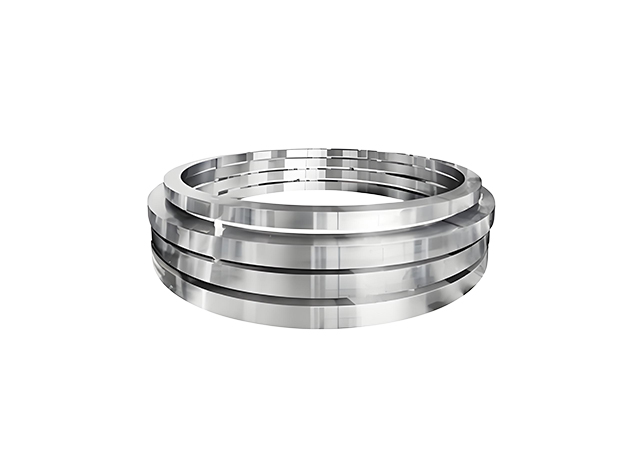
The mechanical performance testing and verification of ring forgings refer to the process of evaluating and validating their mechanical and physical properties. To ensure the quality and reliability of ring forgings, a series of tests and verifications are necessary to confirm that they meet design requirements and fulfill the needs of engineering applications.
The mechanical properties of ring forgings primarily include strength, hardness, toughness, fatigue performance, and creep resistance. Below are the specific methods and steps for testing and verifying these mechanical properties:
Strength Testing:
Strength refers to a material's ability to resist damage under external forces. Common testing methods include tensile tests, compression tests, and bending tests. Before conducting these tests, standard specimens must be prepared and tested according to relevant standards to obtain strength indicators such as yield strength, tensile strength, compressive strength, and bending strength.
Hardness Testing:
Hardness measures a material's resistance to scratching or indentation. Common testing methods include Brinell hardness tests, Rockwell hardness tests, and Vickers hardness tests. By performing hardness tests on the surface of ring forgings, hardness values can be obtained to evaluate the material's hardness characteristics.
Toughness Testing:
Toughness refers to a material's ability to resist fracture. Common testing methods include impact tests and tensile fracture toughness tests. Impact tests often involve methods like impact bending tests and notched impact tests, which evaluate the toughness of ring forgings by assessing their fracture behavior under impact loads. Tensile fracture toughness tests include methods like pure shear tests and fracture morphology analysis, which evaluate the material's toughness under tensile stress.
Fatigue Performance Testing:
Fatigue performance measures a material's durability under cyclic loading. The most common testing method is the fatigue test, where cyclic loads are applied to ring forgings, and changes in stress and strain are recorded. This helps evaluate indicators such as fatigue life and fatigue crack growth rates. Fatigue performance testing is particularly important for ring forgings used in high-load and high-cycle environments.
Creep Resistance Testing:
Creep resistance refers to a material's ability to resist deformation under high temperatures and prolonged stress. The standard testing method is the high-temperature creep test, where ring forgings are subjected to constant or high-temperature loads, and the relationship between deformation and time is recorded. This evaluates the material's deformation characteristics under high-temperature conditions.
During the above testing and verification processes, the following points should be noted:
Select appropriate testing standards and methods to ensure the accuracy and comparability of results.
Ensure the quality of specimen preparation, strictly following standard requirements.
Use suitable testing equipment and measurement tools to guarantee the reliability and accuracy of results.
Perform reasonable data processing and analysis to derive accurate evaluation results.
Through the above testing and verific
